Fall 2023
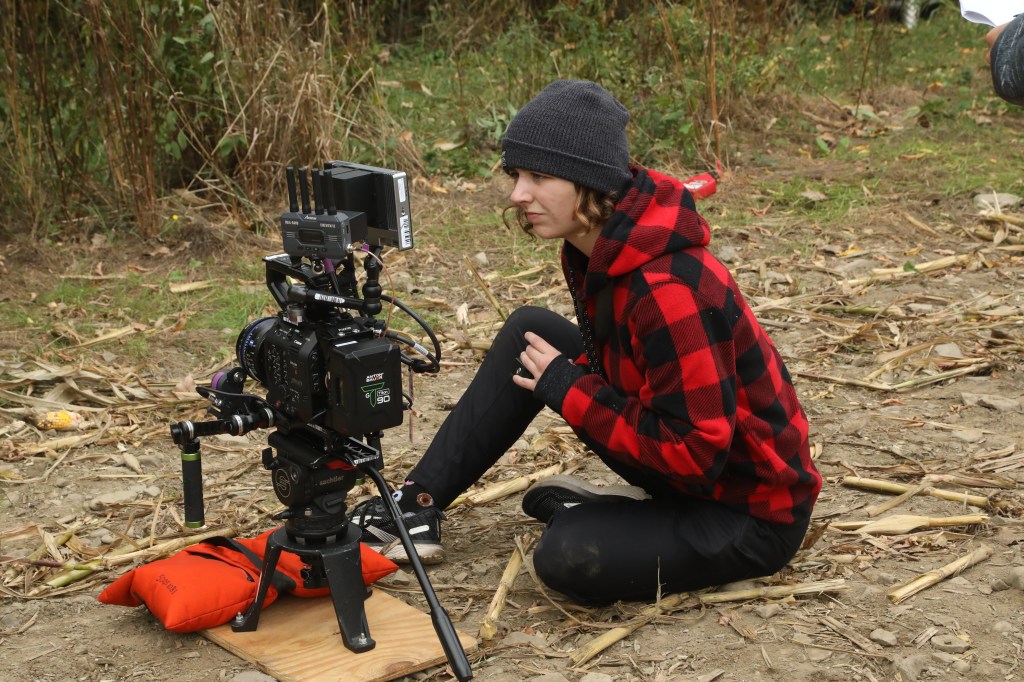
Over fall break last semester, I had the privilege to help Director of Photography, Johnathan Leung in the role of 1st AC! It was for Aiden Cornell’s short film, “Menace”
Our Producer Ally Christal asked me in the lab one day if I wanted to 1st AC for Johnathan Leung, and of course, given a new opportunity, I was excited and said yes.
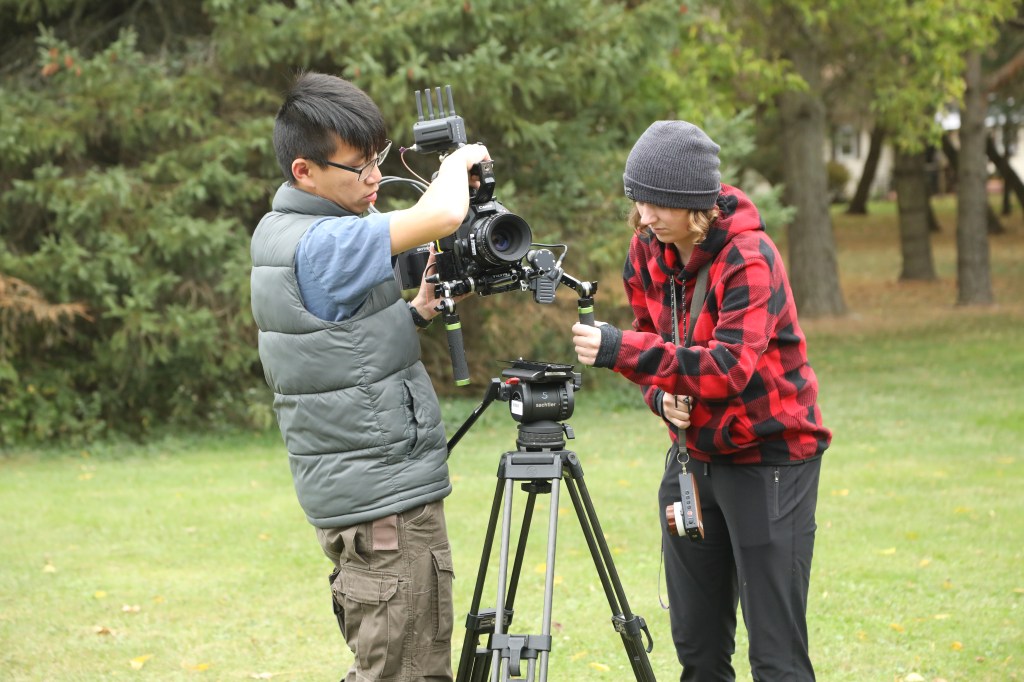
Johnathan and I setting up the Canon C300
What is a 1st AC? (in my own experience, take it with a grain of salt!)
If you watch farther enough in the movie credits of a live action film, you will see a title called First Assistant Camera. That’s the 1st AC. Their job is to set up the camera, (it has a lot of parts, almost like a lego set without the instructions!) put in the media cards, and generally assistant the DP with whatever is needed for the camera, and pull focus.
Focus pulling can be a challenging job, because the subject is at a distance from the lens, and the lens can vary. Let’s say we decided to go on an 80 mm lens. This would mean that our subject is more likely to be closer to the camera, due to how the lens takes in the information with its designed optics. This means that we have the measure our distance from the lens to the person, and consider the length we have to set the focus puller to. This is so our subject can be in focus.
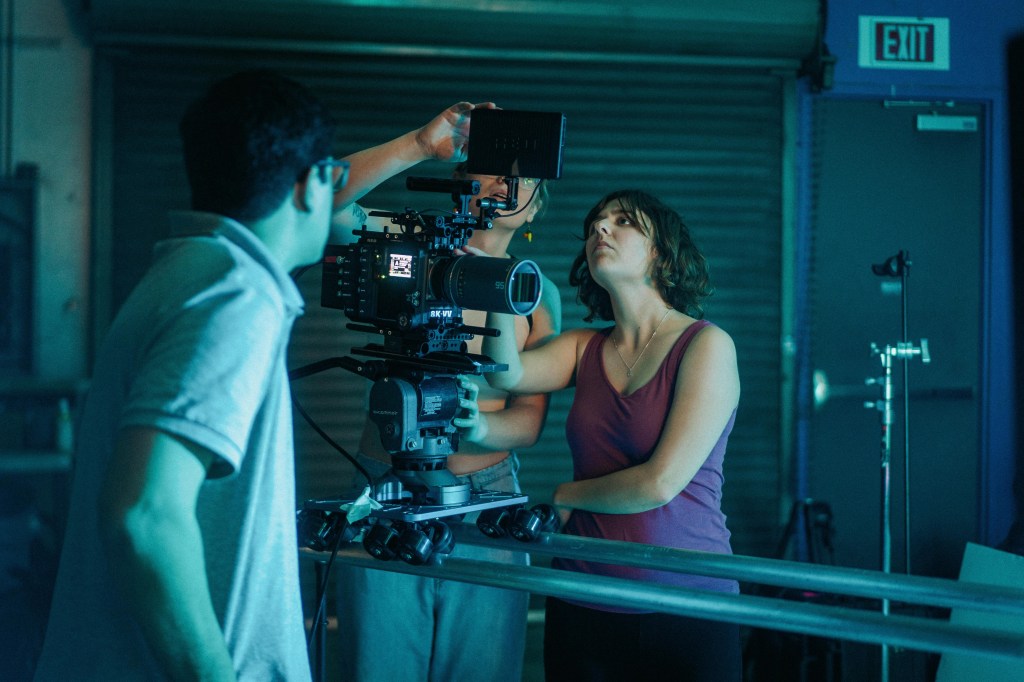
Well, that’s technically how it is done, which is what a lot of people did when there were old film cameras and we didn’t necessarily use monitors to focus in on. Thanks to modern day technology, you can use a remote focus puller (AKA a Nucleus to name a good one!), a monitor, and a receiver to transmit the footage on set.
Then the focus puller has an easier job, and each shot can be watched to ensure our subject is in focus. Some monitors have focus assist, which is a switch on the monitor that you can turn on and off. If it is on, you can see little red dots on the image, as to where our subject is going to be in focus.

Me focus pulling using the Nucleus, wireless fallow focus
A good spot for a subject to be in focus is the eyes. If your eyes are in focus, then you are pretty much good.
Trouble
Since it was one of my first time focus pulling on set, it was a little troubling. Johnathan wanted to do a shot where the camera was handheld and we had to follow our subject around a tree, revealing his expression of freight. Since this was a moving shot, we had to really pay attention to what we were doing. Thankfully, Johnathan is a really good AC himself, so he gave me some tips. One of them was focus marks. Well, actually this is a well know trick, mostly because it actually works really well.
Basically, we would do our practice run, and I would pull where our subject is needed to be in focus. Then I would put a mark there, and so forth. This is to prevent less mistakes and help the job become more smooth as we go on.
Adding this, and using a remote monitor was extremely helpful. I think I did alright for my fist time focus pulling. Obviously I could always be better, and that’s what more practice is all about!
Conclusion
In the end, I learned a lot, and the cast and crew were really awesome! Overall it was a good experience and I think the film came out good! It was a horror, and definitely extremely creepy.


 Master Wanderer Media
Leave a comment